
The flawed response to the crisis has fed a us-vs-them mentality in which the banker, the expert, the coastal entrepreneur, the immigrant, the foreigner are all villains. The crisis was not that much of a problem; the response -- the over-reaction, the sovereign debt build-up and the lasting anger -- is the problem, says Mihir S Sharma.
Reflecting the bearish mood, all sectoral indices, led by metal, teck and healthcare, ended in the negative zone.
Fall of rupee is not necessarily a bad thing as it will support exports which will help bridge the gap in current account deficit, Chief Executive Officer of Nordea Asset Management Company Allan Polack said.
The S&P BSE Sensex ended 46 points lower at 24,824 and Nifty50 settled at 7,555, down by 8 points after hitting intra-day high of 7,600.45.

While information technology companies will benefit, firms with high foreign borrowings or heavy dependence on imports will be hurt.

The 50-share NSE Nifty too closed down 168.30 points, or 1.58 per cent, at 10,498.25 -- a level last seen on January 3 when it closed at 10,443.20.
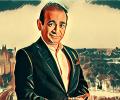
The High Court in London on Tuesday began hearing Nirav Modi's appeal on the grounds of his mental health against extradition to India to face charges of fraud and money laundering, amounting to an estimated $2 billion in the Punjab National Bank (PNB) loan scam case. Lord Justice Jeremy Stuart-Smith and Justice Robert Jay presided over the hearing at the Royal Courts of Justice to determine whether District Judge Sam Goozee's February ruling in favour of extradition was incorrect to overlook the diamond merchant's "high risk of suicide". The court heard of an additional assurance from the Indian authorities on November 13, which reiterates previous commitments of adequate specialist medical care and an ambulance at hand were Nirav to be extradited to Mumbai.

The high court in London on Tuesday began hearing evidence from two leading experts in the field of psychiatry to determine the level of suicide risk faced by Nirav Modi if he is extradited to India to face charges of fraud and money laundering, amounting to an estimated $2 billion in the Punjab National Bank (PNB) loan scam case. Lord Justice Jeremy Stuart-Smith and Justice Robert Jay heard from Andrew Forrester, Professor of Forensic Psychiatry at Cardiff University, and Seena Fazel, Professor of Forensic Psychiatry at Oxford University, in the final stages of the extradition appeal being pursued by the 51-year-old diamond merchant. The two psychiatrists weighed up Nirav's level of depression, which could pose a "substantial" or "elevated" risk of suicide.

The rupee had firmed up 16 paise to close at 67.52 on Thursday.

ICICI Bank, HDFC Bank, IndusInd Bank down between 0.2%-1.4% each.

Sharp fall in capital goods production and manufacturing activity also dented sentiments.

The market could be influenced by events elsewhere in the world and regardless of what happens to India's economy

Oil & gas, banking and pharma sector stocks stole the show

In India post the success of masala and green bonds on the LSE, Nikhil Rathi tells Rajesh Bhayani that there are many international investors interested in buying into the India story
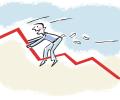
Amid slowing growth and low interest rates, investors will need to focus on stock-picking, suggests John Remmert.

The falls meant that both crude futures were at their lowest levels since mid-April
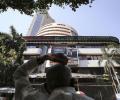
Adani Ports, HUL and L&T gained the most, while ICICI Bank, ONGC, GAIL and Tata Steel lost the most

Indian equity markets registered their highest single-day percentage gains since early October.

Despite the rally, on the basis of valuations, Indian markets aren't too expensive, says Christopher Wood, managing director and equity strategist at CLSA.

If GDP growth in Q2FY18 remains below 7%, the outlook for Samvat 2074 would remain uncertain at best, says Nitin Desai.
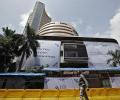
S&P BSE Midcap shed 0.8% while S&P BSE Smallcap tumbled 0.6%
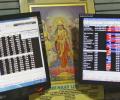
Optimism about a stable govt at the Centre, a demand revival and falling oil prices buoyed the markets.
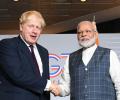
'We don't need to hinge India-UK relations on shared hostility toward China,' observes Ambassador M K Bhadrakumar.

The diamond merchant wanted in India on charges of fraud and money laundering in the estimated $2-billion Punjab National Bank scam case, lost his legal battle against extradition as a UK judge ruled that he does have a case to answer before the Indian courts.

There was fresh selling of the American currency by banks and exporters
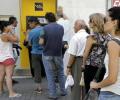
'India cannot expect to be insulated from the crisis. Europe is India's biggest trading partner with two-way trade of E72.5 billion or Rs 530,000 crore last year,' says Paranjoy Guha Thakurta.

Urjit Patel as the new RBI governor whose focus is on taming inflation has lowered the probability of interest rate cut soon

Markets have witnessed a gap down opening mirroring losses in the global equities with US markets taking a hit on worries about the health of Chinese economy.
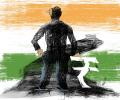
The employment situation remains dire. Whatever can be done to promote greater low-skill employment should be pursued aggressively, advises former chief economic adviser Shankar Acharya.
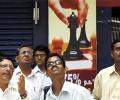
Pharma major Lupin and mortgage lender HDFC were the top losers.

Those scheduled to attend the five-day WEF Annual meeting, beginning January 21, include more than 40 heads of state or government, including those from the UK, Australia, Japan, Iran, Israel, Pakistan, Brazil, Italy, Mauritius, Republic of Korea and Switzerland, WEF announced on Wednesday at a press conference in Geneva.

If the impact of the Greece crisis spreads across Europe and parts of the world which are more interconnected than ever before, India cannot hope to be insulated, says Paranjoy Guha Thakurta.

Amid a grim global scenario, India will have to labour hard to hold on to seven per cent growth in 2016-17.

HDFC and HUL are the latest entrants in the club

India was ranked 12th among the large economies in 2008, and moved up to 10th by 2013, overtaking Canada and Spain.

ICICI Bank and SBI were among the top Sensex gainers along with FMCG majors ITC and HUL.

Stocks of Indian companies with exposure to Europe fell on Tuesday amid concerns about the impact on their sales in case the Russia-Ukraine crisis worsens and the US and its allies impose economic sanctions on Russia. While top conglomerates, including Reliance Industries, the Tata group, and Aditya Birla Group, said they did not have any significant exposure to Russia, executives of some of the oil and gas, pharmaceutical, and tea companies said they were monitoring the situation closely as they earned substantial income from the region. Russian President Vladimir Putin on Monday ordered troops into two breakaway regions of eastern Ukraine after announcing that Russia would recognise their independence.
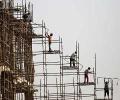
The optimism in global markets could help India as the rebound in GDP is expected to continue and get more broad-based.

The mandates which Pakistan has failed include action against all United Nations-designated terrorists like Jaish-e-Mohammed chief Azhar, Lashker-e-Tayiba founder Hafiz Saeed and the outfit's operational commander Zakiur Rehman Lakhvi.
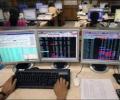
HDFC, TCS, RIL, ITC and ICICI Bank dragged the Sensex by over 100 points.
